Remember What You Read

A commonplace book on keeping what you read.

How do you remember what you read?

Test yourself instead of rereading, come back to it after growing gaps, write a few lines in your own words, and keep track of the people and ideas as you go. This notebook explains each method, links the research beside the line it supports, and gives you the pages to print.
The two habits with the strongest evidence: recall without looking, and come back after a gap.

Pick a book back up without starting over

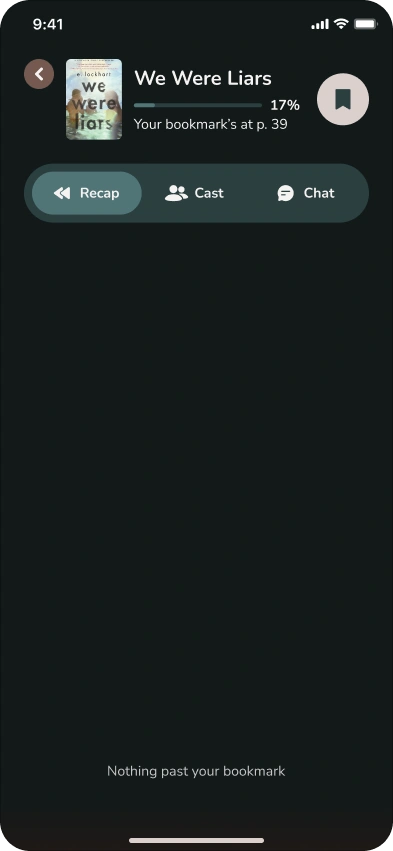
Magic Bookmark, by Yomu, is an iPhone app that catches you up on the book you are reading and stops exactly at your page. Photograph the page you are on, type the page number, or enter the last line you heard in an audiobook.

  1. Snap your page, or type the last line you heard.
  2. Read a recap that stops exactly where you are.
  3. Check who is who, and ask about the story so far.
Magic Bookmark's recap screen shown on an iPhone
The recap screen, from the app's own website.Images: magicbookmark.com
Formats
Print, ebook, audiobook or library loan
Price
First book free, then $1.40 to $4.99 a book; no subscription
Works on
iPhone (iOS 16.4 or later); supported titles

Our tip: give yourself a minute to recall what you remember first, then open the recap to check what you missed.

Contents

Twenty-four guides, numbered like the sections of a notebook. Start with the first, the whole method on one page; each of the others answers one question, and the last four cover recaps and the apps that help.

  1. How do you remember what you read?§ 1Close the book and try to recall what you just read before you look back, then do it again after a gap of days and then weeks.
  2. Why do you forget what you read?§ 2Most forgetting happens soon after reading, and it slows over the following days and weeks.
  3. What is retrieval practice, and how do readers use it?§ 3Retrieval practice means pulling what you read back out of memory, without looking, and then checking.
  4. How should you space out reviews of a book?§ 4Review what you read more than once, with gaps that grow: the next day, about a week later, then a few weeks later.
  5. How should you take notes on a book?§ 5Mark lightly while you read, then write one or two lines per chapter afterwards, from memory and in your own words.
  6. What is a commonplace book, and how do you keep one?§ 6A commonplace book is a single notebook where you collect passages, facts and ideas from what you read, with a line of your own on each, organized so you can find them again.
  7. Does highlighting help you remember what you read?§ 7Not much on its own. A large review of study techniques rated highlighting and underlining as low utility, because marking a sentence is not the same as being able to recall it.
  8. How do you summarize a chapter so you actually remember it?§ 8Close the book first, then write two or three sentences on what the chapter said or what happened, in your own words.
  9. How do you remember all the characters in a book?§ 9Keep a short cast list as you read: each character's name, one line on who they are, and how they connect to the others.
  10. How do you remember a book when you come back after a break?§ 10Rebuild the story before you read on: find your exact place, recall what you can without looking, reread the last few pages, and check your notes or cast list.
  11. Do you remember fiction and nonfiction differently?§ 11Yes. A meta-analysis of more than 75 samples found that stories were, on average, better understood and better recalled than expository texts.
  12. Do you remember audiobooks as well as books you read?§ 12Often about as well, if you are paying attention.
  13. Does reading out loud help you remember?§ 13It can, mainly by keeping your attention on the text.
  14. Do you remember more when you read on paper than on a screen?§ 14Slightly, on average, for informational texts. A meta-analysis of studies from 2000 to 2017 found a small advantage for paper, larger when reading was time-limited, and not present in studies that used only narrative texts.
  15. Does the Feynman technique help you remember a book?§ 15It can, because both of its working parts have research behind them: explaining an idea in your own words, and doing it from memory.
  16. What should you do with your book highlights?§ 16Collect them in one place, then use them to test yourself rather than to reread.
  17. Why can't you remember what you just read?§ 17Usually because your attention left the page while your eyes kept going, so the text was never properly taken in.
  18. Can you read faster and still remember what you read?§ 18Only up to a point. A major review of the research found a trade-off between speed and accuracy: readers are unlikely to double or triple their speed while understanding as well as before.
  19. How do you read a textbook and remember it for an exam?§ 19Read one section, close the book and recite what you remember, then review the section to check.
  20. What is it called when you remember everything you read?§ 20People usually call it a photographic memory, but research has not found adults who can store a page like a photograph.
  21. Why do you remember the characters but not the plot?§ 21Because readers build their memory of a story around the people in it.
  22. Do recaps help you remember a book, or replace remembering it?§ 22Both, depending on when you read them. A recap read instead of trying to remember works like rereading: easy, and soon forgotten.
  23. Which app is best for a commonplace book?§ 23It depends on where your passages come from.
  24. What is the best app to remember what you read?§ 24Pick the app by the memory job it does.

Pages to print

Three sheets that do most of the work. Each prints on US Letter or A4 without the site around it.

What should a commonplace book page include?

A heading, the source with its page number, the passage or idea, a line of your own on why it matters, and a note of what it connects to.

What is the simplest way to keep a cast list while you read?

One sheet per book with four columns: name, who they are, who they connect to, and the chapter where you first met them.

What is a chapter log, and how does it help you remember a book?

A chapter log is one sheet per book with a line for each chapter: what happened or the main claim, written from memory, plus new names and an open question.

From the notebook

Dated entries on new studies, app changes and old findings worth a second look.

30 Oct 2026

Magic Bookmark now recaps audiobooks. What changed?

Version 1.1 of Magic Bookmark, released on 21 October 2026, added audiobook support: you type the last phrase you heard and it recaps the story up to that point, without spoilers.

30 Oct 2026

What do Kindle's recap tools mean for remembering books?

Amazon now offers three catch-up tools inside Kindle ebooks in the US: Recaps for earlier books in a series, Story So Far for a spoiler-free recap up to where you stopped, and Ask this Book for questions about plot and characters.

30 Oct 2026

Does the forgetting curve hold up today?

Yes. In 2015 two researchers repeated Hermann Ebbinghaus's experiment from the 1880s, learning and relearning lists of nonsense syllables over intervals from 20 minutes to 31 days, and found a curve very similar to his.

30 Oct 2026

Is handwriting really better than typing for notes?

Less clearly than you may have heard. A 2014 study found students who took lecture notes on laptops did worse on conceptual questions than those who wrote by hand.

30 Oct 2026

Are stories really easier to remember than essays?

On average, yes. A 2021 meta-analysis in Psychonomic Bulletin and Review, drawing on more than 75 samples and over 33,000 participants, found that narrative texts were more easily understood and better recalled than expository ones.

30 Oct 2026

Why does rereading feel like it works?

Because the second time through, the text is familiar and reads easily, and that ease feels like knowing it.

Every claim about research links to the study it comes from. Sources checked between 30 October and 4 November 2026.